June 2026
This summer, our students will bring home different titles across grade levels and buildings. Some students chose their own books, while others were given a title or two by their teachers. Whatever book your child brings home, it will give them an exciting opportunity to continue their thinking and learning. This is an exciting opportunity to read along with your child or set a 20-30-minute-a-day reading goal for your child.
To help strengthen your child’s comprehension of the books they are reading this summer, here are some ideas for grades 1st – 12th! Please read below or click the link here.
Have an enjoyable summer of reading!
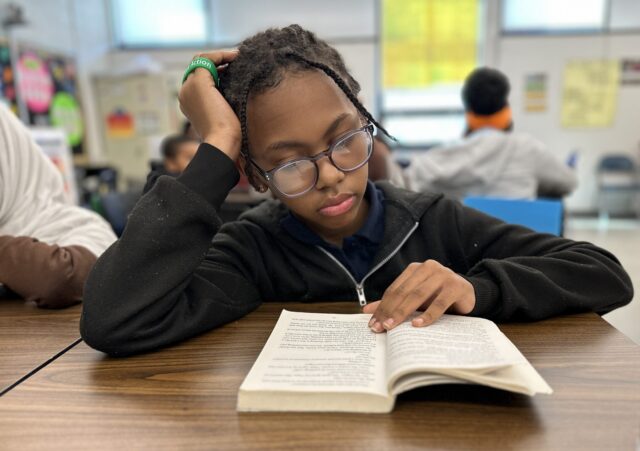
Rising 1st-3rd Grades Summer Reading Activity Choices
- Ask Questions: Write down 5 questions you have about the text as you read your book. What information do you need to answer your questions?
- Design: Create a new book cover for your book. Be sure to include the title, author, and illustrator. Write a back cover summary to encourage readers to read this book.
Vocabulary: Identify 3-5 new or interesting vocabulary words in the book you are reading. Look up the meaning of each word. Write them down, and then use each word in a new sentence. - Feelings: Did this book make you laugh? Cry? Worry? Smile? Become angry? Explain.
- Ending: Do you like the ending of the story? Why or why not? How would you change it?
- Main Idea: What is the main idea of what you read? Give 3 details to support the main idea.
- Connections: What connections can you make between your life and the events from the story? Explain.
- You Are A Character: If you could become part of the story, what part would you enter? What would your character do? How would the story change if you were in it?
- Song: If you could choose a theme song for the story you read, what would it be? Why did you choose this song?
Rising 4th-6th Grades Summer Reading Activity Choices
- Ask Questions: Write down 5 questions you have about the text as you read your book. What information do you need to answer your questions?
- Design: Create a new book cover for your book. Be sure to include the title, author, and illustrator. Write a back cover summary to encourage readers to read this book.
- Song: Write a song or choose a song that would be fitting to go with your story.
- Comic Strip: Design a comic strip to illustrate a scene from your book. Include details and character commentary.
- Graffiti Page: Choose 3 quotes from the book that stand out to you. Write these quotes in a colorful graffiti style on one page of the notebook. On the back of the page, explain why these quotes are meaningful to you and/or a part of the story.
- Poetry: Write a poem that represents an important event in your story.
- Interview: Interview a character from the story. Write 6-8 questions you would ask them if you had an opportunity to interview them.
- Movie Poster: Imagine your book was turned into a movie. Create the movie poster that would be used to advertise the movie? Who would you cast for the main characters?
- Vocabulary: Identify 3-5 new or interesting vocabulary words in the book you are reading. Look up each word to find the meaning. Write them down, and then use each in a written sentence.
Rising 7th-12th Grades Summer Reading Activity Choices
These activities are adaptable to any genre—fiction, non-fiction, graphic novels, or memoirs—and focus on deep comprehension, critical thinking, and personal expression.
Creative & Visual Projects
- Design a Soundtrack or Playlist: Students create a 5–7 song playlist on Spotify or YouTube that represents the book’s emotional arc, themes, or specific characters.
- Map the Setting: For books where the journey or environment is crucial, students can draw a physical map or a “mental map” tracking a character’s shifts.
- The “Book Bento” Box: Inspired by the Japanese lunchbox, students place the book in the center of a frame and surround it with 4–5 real-world objects that symbolize major themes, plot points, or character traits. They take a bird’s-eye-view photo of the layout.
Alternative Writing & Perspective Shifts
- The “Missing Scene” or Alternative Ending: Students write a scene that didn’t happen in the book but logically could have (e.g., a conversation between two characters when the protagonist wasn’t in the room, or a completely different resolution to the climax).
- Epistolary Exchanges (Letters or Texts): Students write a series of letters, emails, or modern text message threads between two characters at a critical turning point in the text.
- An Op-Ed or Letter to the Editor: If reading non-fiction or a realistic fiction book addressing a heavy social issue, students write a formal opinion piece from the perspective of a character, or as themselves responding to the book’s core argument.
Digital & Performance Media
- Record a Podcast Episode or Interview: Students work solo or with a peer to record a 3–5 minute podcast segment. They can interview a “character” (played by themselves or a friend), debate a controversial decision made in the book, or review it without spoilers.
- Create a 60-Second “BookTok” or Trailer: Students use a phone or tablet to film a quick, high-energy video review or cinematic teaser for the book—focusing on the hook, the mood, and why someone should read it.
- Character Social Media Takeover: Students design a mock social media profile (Instagram grid, TikTok feed, or LinkedIn profile) for a main character or historical figure from the book.
Critical Analysis & Synthesis
- The “Two Truths and a Lie” Character Profile: Students write down three highly specific statements about a character’s motivations, actions, or history—two true, one a subtle lie. They must provide the page numbers or evidence that proves which is which.
- Theme One-Pager: On a blank sheet of paper, students create a visual synthesis of the book’s biggest idea. It must include: the central theme written as a full sentence, 2–3 meaningful quotes, a central image, and a personal connection.