Nursing
School nursing, a specialized practice of nursing, protects and promotes student health, facilitates optimal development, and advances academic success.
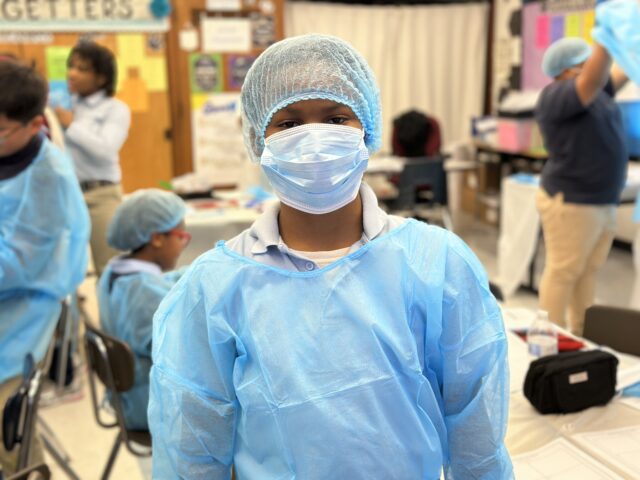 School nurses, grounded in ethical and evidence-based practice, are the leaders who bridge health care and education, provide care coordination, advocate for quality student-centered care, and collaborate to design systems that allow individuals and communities to develop their full potential.
Core Duties of a School Nurse
- Immunization Monitoring
- Infectious Disease Monitoring
- Physicals and Screenings
- Medication Dispensing
- First Aid
- Health and Wellness Programs
- Chronic Care
Pennsylvania state law mandates specific health screenings for students. In order to comply with the state’s mandated health program, your school nurse will assess the following on an annual basis:
Growth Screening: Height and weight are recorded annually for each student.
Vision Screening: Vision screening, both for near and far vision, is completed annually for all students. Color vision, depth perception, and convex lens are assessed in 2nd grade.
Hearing Screening: Hearing screenings are done annually for those students in kindergarten and in grades 1, 2, 3, 7, 11, and all special Ed students in every grade.
Scoliosis Screening: Scoliosis screening, a mandated screening for spinal curvature, is done in grades 6 and 7.
Body Mass Index (BMI): BMI is a screening tool used to assess children at risk for being underweight or overweight. BMI is calculated based upon body weight, height, age, and gender data. BMI in children is age-specific and gender-specific. Your child is not given this information at any time. The school nurse makes the calculations after the child’s health screening session and notes this information in your child’s school health record. This medical record is kept confidential. If at any time you would like this information, please reach out to your school nurse via in writing and/or email; they will not be sent home to you.
Parents will be notified if their child’s health screenings reveal any concerns or abnormalities. In these instances, your school nurses will provide a referral for the parent to follow up.
When to keep your student home
Sometimes your child is simply too ill to go to school. To help them heal and to prevent others from becoming ill, please review these policies for when to keep your child home sick from school.
Transportation of an ill or injured student
The transportation of ill or injured students is the responsibility of the parent or guardian. Staff members are not permitted to transport students. Parents or guardians will be contacted to provide or arrange for transportation. They will also be asked to arrange for transportation for students who have driven to school, but, who in the judgment of the school nurse, are medically unable to drive home safely.
In the event of severe illness or injury, an ambulance will be called to transport the student to the appropriate hospital. The ambulance fee is the responsibility of the parent or guardian and is usually covered by medical insurance.
First aid procedure
The Health Office is staffed full-time in all district school buildings to provide first aid and support to students who become ill or injured during the school day. Parents will be notified if further medical care is needed. It is imperative that each child’s emergency card be kept up to date at all times.
The following procedures will be observed in cases of serious student illness or injury in school:
- Administer First Aid
- Activate 911 in emergency situations
- Notify parents
Allergies
Parents of children known to have severe allergic reactions to insects, foods, or medications must alert the school nurse. Written instructions and, in some cases, the necessary medication for emergency treatment must be provided.
Seizures
See the Seizure Action Plan (SAP) form provided by the Epilepsy Foundation here.
Crutches, wheelchair, and elevator use
Any student experiencing mobility problems or having a physical condition requiring the use of crutches, a wheelchair, and/or the school elevator should bring a physician’s note to the school nurse with the following information:
- Diagnosis and/or reason for crutches or wheelchair and/or elevator
- Duration of crutches or wheelchair and/or elevator use and date activity can be resumed
- Physician’s signature and contact information
Schools will not provide assistive devices for daily use.
Legal implication of injury and illness
Our team of WPSD nurses are not licensed to make medical diagnoses. However, students and families may benefit from the school nurse’s knowledge and expertise in assessing the health care needs of each child. Nurses can advise whether further medical care may be needed, render first aid, and care for minor illnesses and injuries occurring during the school day.
The school nurse cannot assume the responsibility of caring for injuries/illnesses that did not occur at school. Parents should not expect school personnel to treat such injuries/illnesses. Students are offered participation in the School Accident Insurance program which assists in the health care costs of private physicians and hospitals. The school district is not responsible for physician fees or other charges connected with follow-up treatment of injuries or illnesses.
Parental Education of Type 1 Diabetes
This type 1 diabetes information was developed pursuant to the Pennsylvania School Code (24 P.S. § 1414.12) and is for school entities and nonpublic schools to provide to parents and guardians of incoming elementary school students and students entering grade six, beginning with the 2026-2027 School Year.
Type 1 diabetes in children is an autoimmune disease that can be fatal if untreated, and the guidance provided in this information sheet is intended to raise awareness about this disease.